


Spoiler alert: This post discusses central details from Hulu’s three-part series Hey Beautiful: Anatomy of a Romance Scam.
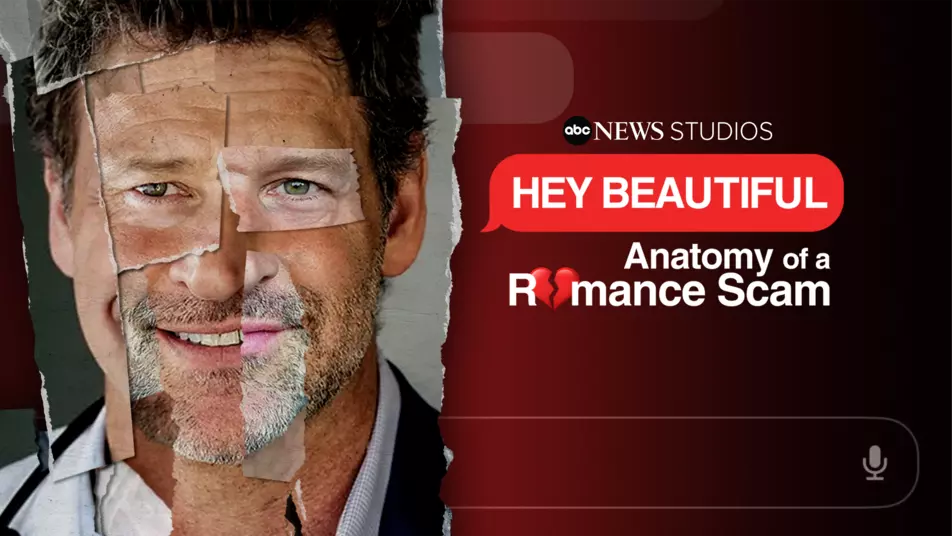
Sometimes television shows reveal the true cost of dirty data beyond wasted ads or inaccurate records. Dirty Data can steal money, relationships, reputations, identities, and years of life. Scams don’t succeed because victims are careless, but because scammers craft convincing identities from real people and exploit trusted platforms.
Hey Beautiful: Anatomy of a Romance Scam follows three women in Connecticut, Ontario, and Frankfurt. Each believes she is developing a relationship with a different man.
The photographs used belong to Brian Haugen, an actor and makeup artist who had posted expressive pictures of himself online. He was living his own life, and someone took the visual evidence of that life and turned it into inventory. A scammer could place the same face inside many different stories because the photographs provided an emotional vocabulary.
The data was real. Its ownership, context, and meaning were stripped away
Clean data isn't simply information without spelling mistakes; it's de-duping records and making sure they are current. According to the Clean Data Alliance, Consumer Clean data requires provenance:
Who created it?
Who owns it?
Did they consent to its use?
Has it been altered or separated from its original context?
Can the person correct or remove it?
Brian could prove that the face was his. That did not give him effective control over the fake identities built from it.
Ruth Grover built the audit trail the platforms did not
One of the most important people in the series is Ruth Grover, founder of ScamHaters United. Grover became involved after a scammer targeted her. She began documenting stolen photographs, fake names, repeated scripts, phone numbers, profiles, and stories. Her work exposed a pattern that individual victims could not easily see.
One woman saw a man with a specific name and personal history. Another saw the same face under a different name. Brian saw pieces of his actual life scattered across fraudulent profiles. Ruth and her volunteers connected those records.
They created a human identity-resolution system.
That is what makes her work so relevant to the Clean Data Alliance. She did not need to read every private conversation. She compared visible evidence and linked repeated elements:
The same photographs attached to different names
The same personal crisis reused across relationships
The same phone numbers and contact patterns
The same requests to move conversations between platforms
The same excuses preventing an in-person meeting
The same financial emergencies appearing at predictable moments
The platforms possessed far more data and computing power. Ruth had something their systems lacked: a commitment to connect the evidence.
The platforms could have interrupted this
Scammers found people through Facebook, Instagram, LinkedIn, dating sites, Words With Friends, and other platforms that encourage strangers to connect.
Meta could have detected Brian’s photographs appearing across Facebook and Instagram under conflicting names and biographies. It could have connected impersonation reports instead of treating each account as a separate moderation problem. It could also have used reported-account, device, phone-number, and infrastructure signals to identify related activity on WhatsApp without reading encrypted conversations.
LinkedIn, Words With Friends, dating services, and other discovery platforms could have flagged new accounts that contacted large numbers of strangers, reused reported photographs, or quickly pushed people toward private messaging.
WhatsApp became the private operating space where scammers intensified the relationships. End-to-end encryption limited Meta’s access to message content, but it did not erase account age, device registrations, contact patterns, blocks, reports, repeated phone numbers, or connections to known scam infrastructure.
In 2025, WhatsApp said it had removed 6.8 million accounts associated with criminal scam centers. The company clearly had ways to detect these networks. It acted after many people had already lost money and years of emotional investment.
Financial institutions and payment services also saw pieces of the pattern: unusual transfers, rapid payments to new recipients, repeated gift-card purchases, cryptocurrency deposits, and accounts receiving money from unrelated people. Telecom companies saw disposable numbers and repeated account registrations. Law enforcement agencies received reports that often remained separated by jurisdiction.
Each organization held one piece of the scam. Few took responsibility for connecting the pieces.
That fragmentation enabled the operation. The platforms benefited from engagement. Messaging services carried the conversations. Payment systems moved the money. Criminal networks exploited the gaps between them. The people being impersonated, manipulated, and sometimes forced to run the scams absorbed the cost.
The core failure was not a lack of data. It was the failure to connect and act on data that already existed.
Facebook punished the person whose identity was stolen
Brian Haugen found fake profiles using his photographs and reported the impersonation to Facebook. The response exposed how broken the system was.
As Hey Beautiful recounts, Brian’s complaint did not lead Meta to establish him as the real person, protect his photographs, and trace the accounts stealing his identity. Instead, Meta deleted his legitimate Instagram account.
Think about what that means. The scammers copied Brian’s face, attached it to false names, and used it to steal from women. When the real Brian tried to correct the record, Meta’s system treated him as the problem.
His Instagram account was also part of his real professional identity. Losing the account meant losing his public history and a channel connected to his career.
The person messaging you may also be trapped
The Hulu series shows the personal anatomy of a romance scam. But a recent New York Times report from Shunda Park in Myanmar shows the industrial system behind it.
Shunda Park reportedly held more than 3,500 workers from nearly 30 countries. Some went willingly. Others were kidnapped or recruited through false job offers. Inside were open-plan workrooms, false business sets, phones, SIM cards, fake identities, and spaces used for punishment.
Workers could spend 12-hour shifts cultivating targets through carefully staged conversations. People who resisted could face beatings, shackles, confinement, or withheld pay.
The infrastructure joins several forms of exploitation:
A real person’s photographs are stolen.
A fake identity is built around them.
A worker, sometimes trafficked, operates that identity.
A platform distributes it.
A target supplies attention, emotion, personal data, and eventually money.
The operation records what worked and repeats it.
This is not a single bad actor improvising from a bedroom. It is a data supply chain.
What does one scam cost?
The Federal Trade Commission reported 64,000 romance-scam reports and $1.14 billion in reported losses during 2023. That is roughly $17,800 per report, and reported losses capture only part of the damage.
The New York Times reported that cyberfraud operations in Southeast Asia took at least $10 billion from people in the United States during 2024.
A United States Institute of Peace estimate, reported by The Guardian, placed annual global scam revenue at $63.9 billion, with $39 billion linked to operations in Cambodia, Myanmar, and Laos.
But a bank transfer is only the easiest cost to count.
A romance-scam target may lose:
Savings, retirement funds, or borrowed money
Months or years invested in a relationship that never existed
Trust in future partners
Confidence in their own judgment
Relationships with family members who tried to intervene
Privacy, dignity, and emotional security
Research reviews describe grief, shame, anxiety, depression, isolation, financial ruin, and continuing vulnerability to additional scams. A systematic review of online romance fraud found that the harm combines financial loss with the emotional collapse of a relationship victims experienced as real.
This is part of a larger accountability problem
The companies will tell us that scams are sophisticated. They are.
They will tell us that enforcement is difficult. It is.
But difficulty does not erase responsibility.
Facebook, Twitter, and WhatsApp had signals, policies, reports, and technical tools that could have slowed these operations, made them more expensive, and made them easier to expose. They did not connect or act on those signals quickly enough.
Individual vigilance cannot compensate for platforms that treat repeated impersonation as unrelated incidents.
Clean data is not housekeeping.
It is prevention infrastructure. It is how we keep a real person’s face from becoming somebody else’s weapon.