

When a Meeting Becomes Data
Consent, Context, and the Tools We Keep Using Anyway

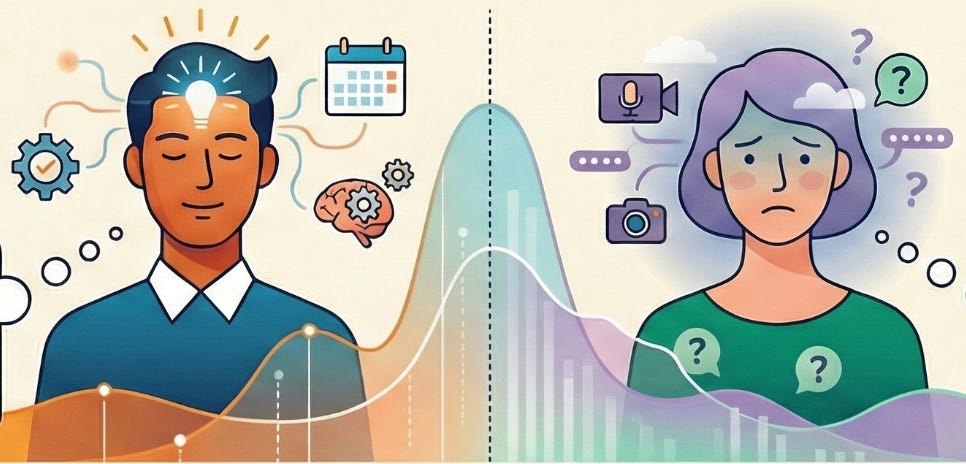
I represent the Clean Data Alliance and spend time thinking about data agency, informed consent, and how easily human context gets stripped away once information becomes a system. At the same time, I use modern meeting software, such as AI note-taking tools. That tension is the point of this story. Because what I experience when I enable these tools is not what everyone else in the meeting experiences, even though we are in the same room, at the same time, saying the same words.
It Starts Before the Meeting With the Browser
Long before anyone speaks, the meeting has already begun. You click a calendar link. Your browser opens; maybe Google Chrome, Apple Safari, Mozilla Firefox, or Microsoft Edge. At this stage, no one is listening to your ideas yet, but the system is already listening to context:
Your IP address (which implies location)
Your device and operating system
Your browser version
Network quality
The moment you join and leave
Whether your mic or camera toggles on and off
Diagnostic and security telemetry
Most people never notice this layer; Most people don’t need to. But it matters because this is where identity, behavior, and presence are established; quietly, automatically, and without discussion.
Then You Enter the Room
Next comes the meeting platform itself.
The room might be hosted by Zoom, Google Meet, or Microsoft Teams.
To their credit, modern platforms do many things right:
Encryption in transit
Access controls and waiting rooms
Host moderation
Global privacy compliance
Increasingly clear statements about not selling meeting content or training AI models on it
From a security standpoint, this is progress.
But security is not the same thing as agency.
When you join a meeting, what you usually explicitly consent to is narrow:
The platform processes data to function
The host’s ability to manage the room
The possibility that recording might occur
What you usually do not explicitly consent to is how far your words might travel after the meeting ends.
The Moment the Meeting Becomes Data
Everything changes the instant someone enables recording or transcription.
A conversation becomes an artifact.
Now there is:
Audio and video
A transcript
Speaker identification
Time-stamped statements
Searchable, exportable text
This is where the gap between intention and impact begins.
Most participants think, this is just for notes. What’s actually true is more complicated.
Once recorded, meeting data can be:
Reviewed without tone or context
Interpreted by people who weren’t present
Used in evaluations or disputes
Enter legal discovery
Stored far longer than the memory of the meeting itself
Recording doesn’t just preserve what happened. It changes the power dynamics around it.
The Silent Participant Enters
Now comes the part almost no one discusses clearly.
An AI note-taker joins the meeting.
Sometimes it’s obvious.
Sometimes it’s a bot name.
Sometimes it’s invisible.
Tools like Fathom Video, Otter, Fireflies, or native AI assistants listen, transcribe, summarize, and interpret.
They may:
Generate summaries
Extract action items
Highlight “key moments.”
Create derivative insights
Store outputs outside the meeting platform
Be improved over time using aggregated data
From a system perspective, this is authorized.
From a human perspective, this is often where discomfort begins.
Because often no one pauses the meeting and asks if everyone is okay with this?”
Why I Still Use AI Note Takers
From my perspective as someone who understands these systems, the benefits often outweigh the risks.
AI note-takers help me:
Stay present instead of scribbling
Capture nuance I’d otherwise forget
Synthesize across conversations
Reduce cognitive load
Follow through more effectively
I know what’s being captured, where it goes, what I’m trading and I have the power to enable or disable the tool, delete outputs, audit usage and explain the purpose. For me, this is a conscious tradeoff.
But the Participant Is Having a Different Experience
The participant is not making the same calculation. They didn’t turn the tool on, choose the settings, and the don’t know what happens next.
What they feel is uncertainty:
“Am I being recorded right now?”
“Who will read this later?”
“Will this summary reflect me accurately?”
“Can I object without consequences?”
“Did I just contribute data without realizing it?”
This difference matters because Clean Data isn’t about banning tools; it’s about recognizing that benefits and risks are unevenly distributed.
The Real Risks Aren’t Technical
The biggest risks here aren’t hacks or breaches; they’re human.
Consent Drift
Consent is often implied rather than explicit.
Granted by hosts, not shared by groups.
Context Collapse
Meetings contain half-formed ideas, emotion, and nuance.
Summaries flatten that, while the record persists.
Secondary Use
Even when data isn’t sold, it may still be reused, reinterpreted, or combined in ways participants may have never anticipated.
Power Asymmetry
One person gains efficiency.
Others absorb exposure.
Why These Tools Still Matter
Despite the risks, these tools offer real value:
Accessibility for people with disabilities
Support for memory and cognition
Better follow-through
Inclusion of different communication styles
Reduced burnout
The problem is not the tools, it’s using them without shared understanding.
What Best Practice Looks Like
For Participants
Expect transparency about recording and AI tools
Ask questions without shame
Request access to outputs that include your words
Speak up when context matters
For Hosts
Announce recording and note-taking clearly
Explain why the tool is being used
Give participants a real chance to object
Share outputs with those whose data you captured
Turn tools off when they’re not necessary
For Companies
Treat meeting data as sensitive, not casual
Prohibit secondary use without renewed consent
Train employees on human-centered data practices
Audit AI tools like any other vendor
Make dignity part of data governance
The Clean Data North Star
I will continue to use these tools, and I will continue to insist on standards. Because the future isn’t about choosing between productivity and dignity, it’s about refusing the idea that one person’s efficiency should quietly depend on another person’s silence.
If data can affect a person, that person deserves agency over it.
Not buried in a policy.
Not assumed through hierarchy.
Not implied by clicking “Join.”
That’s how meetings stay human even when machines are in the room.